

Gather a room full of Wikipedians for a birthday party, and what do you get? Intellectual rabbit holes and a rainbow of subjects. Suits, shorts, and seriously impressive beards. Expert networkers who know things you don’t. All unified by one goal: open, trustworthy, human-curated knowledge for everyone.
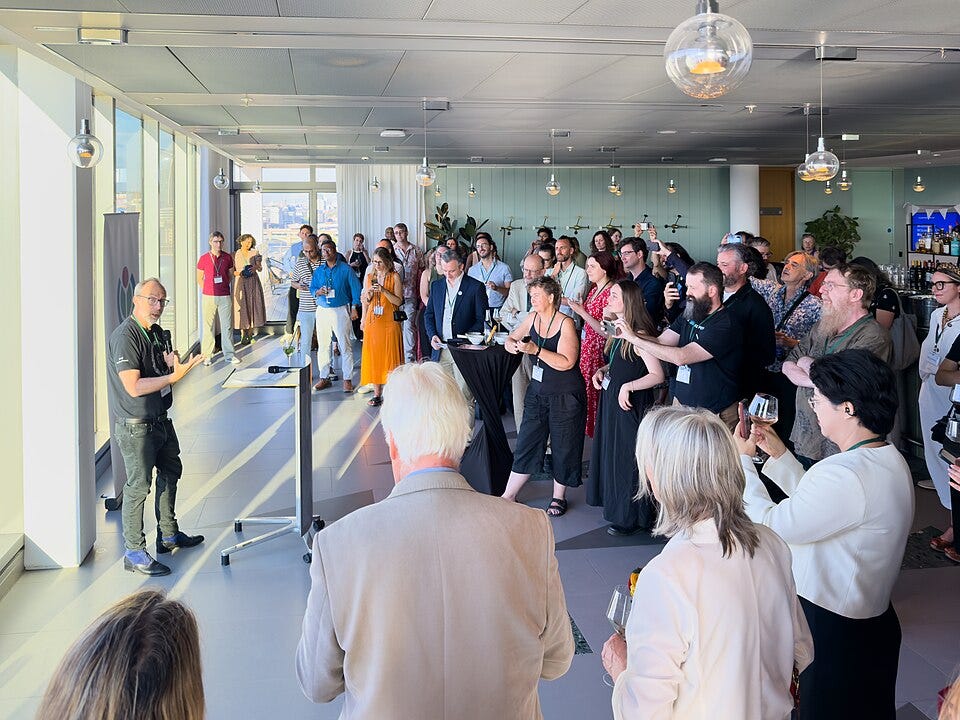
That’s the room I found myself in last week, and it made the case for a different reality than the one the tech headlines describe. Read the coverage of the modern internet and you’d assume it’s run entirely from a handful of boardrooms: Bezos, Musk, whichever executive is dominating this week’s news cycle. That framing misses the actual engine room. The internet that answers your questions, settles your arguments and got you through your dissertation runs on something much less glamorous: volunteers, most of whom you will never hear of, doing unpaid work for decades.
AI has made this easy to forget. Ask a chatbot a question and an answer appears with no visible author and no visible cost, which creates the impression that the digital town square is a vending machine, not a construction site. Somebody had to write the answer before the machine could serve it back to you. Somebody still has to.
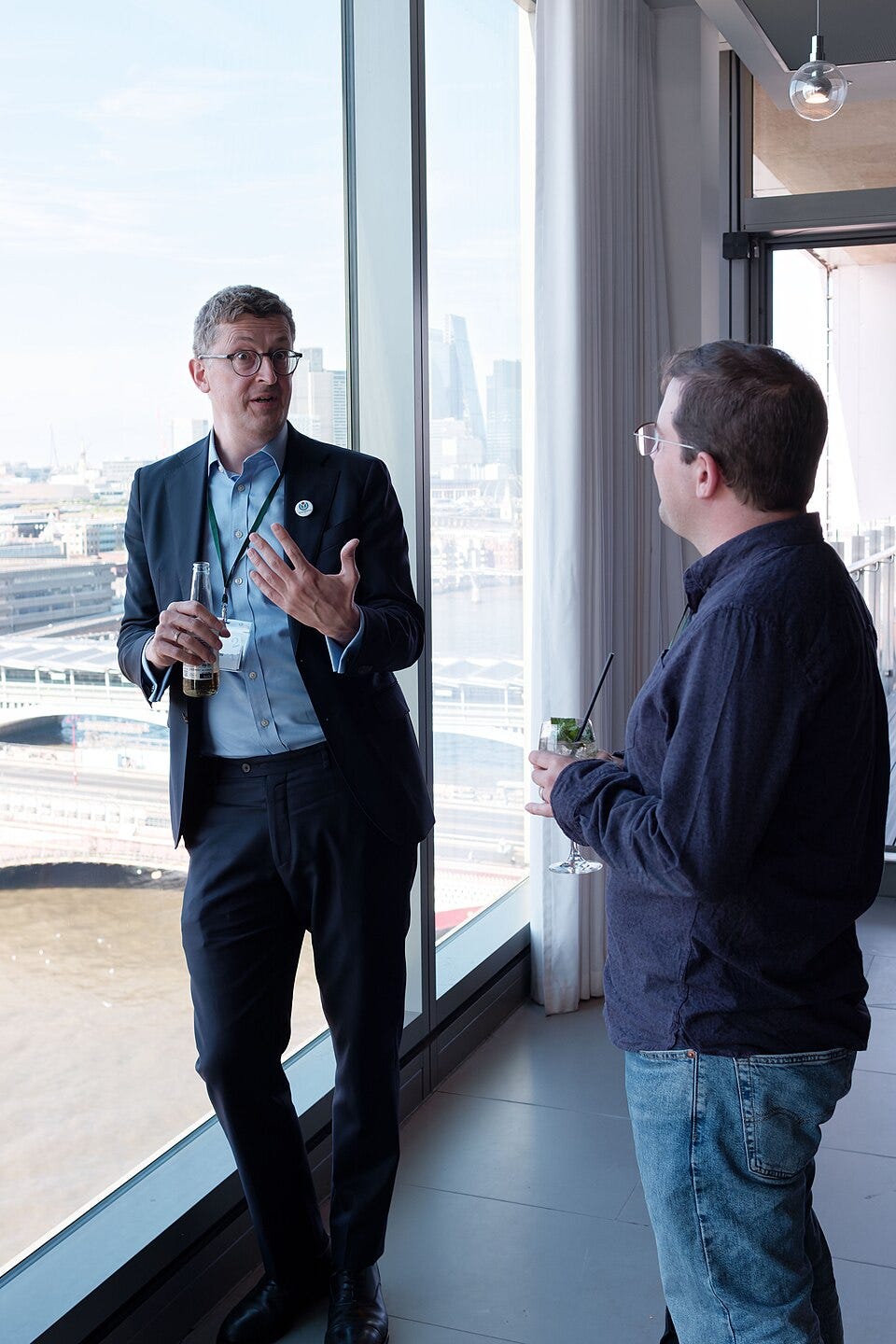
You should know Kelly Foster
Kelly Foster has been part of the Wikimedia movement since 2012 and volunteering with Wikimedia UK since 2016. She has been a driving force behind adding content about Black people, historically underrepresented on Wikimedia projects, and in training new editors to do the same. She has served as a trustee of Wikimedia UK and worked as a Wikimedian in Residence on the Making African Connections research project.
What makes Kelly’s work distinctive isn’t just the volume of it. It’s the criticism she brings alongside the enthusiasm. She has consistently pushed the Wikimedia movement to reckon with the legacy of colonialism in shaping the knowledge it works with, arguing that open knowledge should challenge the dominance of Western culture and the best-resourced institutions. On 3 July, that work earned her one of Wikimedia UK’s five Silver Jubilee Awards, presented by Jimmy Wales himself, marking a quarter century of volunteers whose contributions have had a lasting impact on the UK Wikimedia community.
She is one of thousands doing the same unglamorous work: the uncredited source behind an AI-generated answer, the reason a Wikipedia page existed at all when you needed it for a project.
The occasion
Wikimedia UK marked two anniversaries at once at Sea Containers on the South Bank: Wikipedia’s 25th birthday and Wikimedia UK’s 15th year as a registered charity. The room brought together editors with two decades of contributions behind them alongside newer volunteers, partners, funders, policymakers, staff and trustees. Wikipedia’s founding premise sounds faintly ridiculous said aloud: the sum of human knowledge, maintained by whoever shows up. In a room with several hundred of the people who show up, it stops sounding ridiculous and starts sounding like a plan that worked.


Twenty-five years in, Wikipedia runs to more than 300 language editions and a wider network of sister projects, kept current by close to 250,000 volunteer editors, and helps billions of people explore ideas and answer questions every single day. Nobody in that room owns any of it.
Jimmy Wales was guest of honour, presenting Wikimedia UK’s Silver Jubilee Awards to five volunteers whose work has shaped the UK Wikimedia community over the past 25 years: Andy Mabbett, who has been training and building partnerships since 2003 and once got the subject of a Wikipedia article to record their own voice aboard the International Space Station; Kelly Foster; Kirsty Ross, who founded the IDEA Network to make knowledge production more accessible; Lucy Moore, who has written a Wikipedia article for a woman from every country in the world; and Martin Poulter, involved since 2005 and part of the original push to have Wikimedia UK recognised as a charity.
Josie Fraser gave some sharp remarks on the evening’s themes, and it was good to talk to Adrian Beidas, Mohammed Amin, Monica Westin and Belvin Tawuya, among others, across the room. It was also good, as ever, to catch up with Jimmy Wales himself, whom I’d interviewed at Kekst CNC’s offices at the end of last year.
The theory that predicted this room
The evening kept pulling my mind back to Clay Shirky’s Cognitive Surplus. Shirky’s 2010 argument was that the twentieth century left educated societies sitting on a vast reserve of free time and spare cognitive capacity, most of it spent watching television. Connect that surplus to the right tools, he argued, and people would build things like Wikipedia: freely given, collaboratively produced, better than anything a market alone would generate. It was dismissed as naive at the time. Standing in a room full of the people who proved him right, it reads less like naivety and more like an accurate forecast, delivered 15 years early.
There’s an injustice buried in that forecast, though. Shirky imagined a surplus given freely for the pleasure of building something together. Nobody accounted for that surplus being harvested to train the products of the companies now straining the infrastructure it runs on.
What that surplus is now funding, whether it likes it or not
Since January 2024, bandwidth for multimedia downloads from Wikimedia Commons has grown by 50%, and almost none of that growth is human. It’s AI crawlers, scraping the archive to train models, some of them disguising their traffic as ordinary browsers to dodge detection. Bots have generated roughly two-thirds of the Foundation’s most resource-intensive traffic while accounting for barely a third of actual page views.
The arms race hasn’t let up since: as of March 2026, the Foundation was blocking or throttling around 25% of all automated crawler requests hitting its sites, a filtering operation now running into the billions of requests a day. That’s staff time and infrastructure spend going into keeping bots out rather than building anything for readers or editors. All of it sits on donations that average around $11 a head. The content is free. The infrastructure is not.
I’m told the London birthday event itself only happened because of a generous individual donation: a charity funded on £10 gifts throwing itself a party it could barely afford, in the same year the industry extracting value from its archive posted record profits.
Why this should matter to anyone in comms
The people keeping this running aren’t the tech billionaires whose faces dominate the coverage. They’re people like Kelly Foster, giving up evenings for a cause that will never make them rich. If you’ve built a comms career on the back of Wikipedia’s credibility, or you’ve ever had to sort out a client’s page, you’ve been drawing on that unpaid labour without necessarily clocking it.
Consider giving something back. In an information environment this thick with misinformation, Wikipedia and the volunteers behind it are one of the few things left actually worth defending, and they’re currently doing it on donations averaging the price of a coffee.
Read Wikimedia UK’s article here, and whilst you’re at it, please consider donating.