

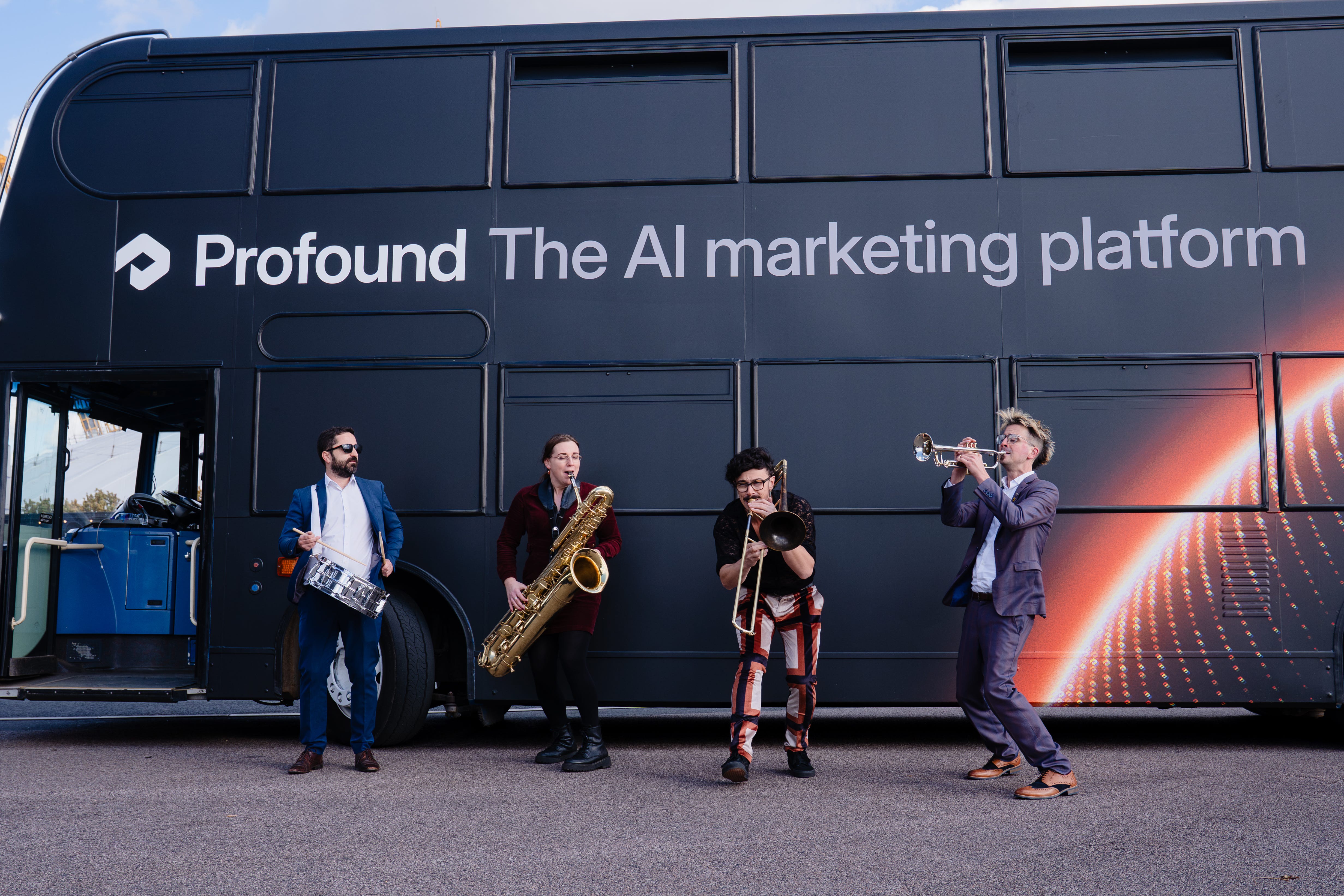
Like most good abductions, it began with a blacked-out vehicle on a busy London street. Except this was a Profound-branded bus picking up fellow Generative Engine Optimisation (GEO) geeks - proud geeks, that is - to the highly sought-after Zero Click London 2026. The journey, whilst short, was full of unexpected twists and turns, as I consoled beside a lovely woman from Unilever about this unconventional start to a conference. Conventions continued to be broken as a brass band blasted a System of a Down track.
Profound, as a company, though, is breaking conventions. In two years, the brand has appeared out of seemingly nowhere, announcing its seed round in August 2024. It has since raised around $335 million, closing a $180 million round at a $1.8 billion valuation in September 2026. The platform, which is making a clear pitch to take ownership of the entire agentic marketing funnel, says it’s used by 16% of the Fortune 500; Walmart, Target and Estée Lauder among them.
That is explosive growth, and consequently everyone in the room was quite new; either not in their GEO roles for long or at the beginning of the journey. This is a practice where no one can meaningfully claim anything more than 3 years of experience. So it's a testament to Profound’s reputation that they should run the largest GEO event in London this year.

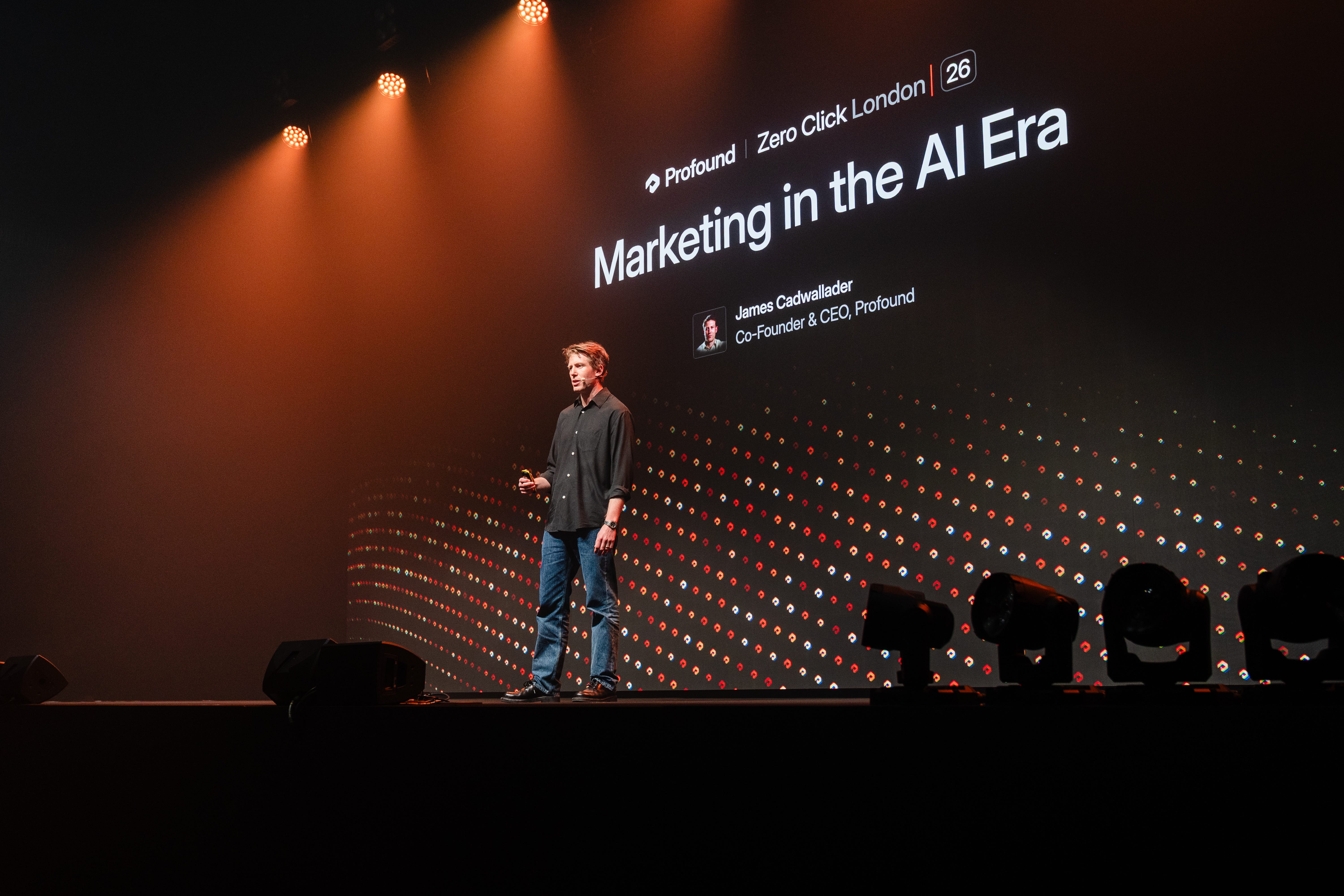
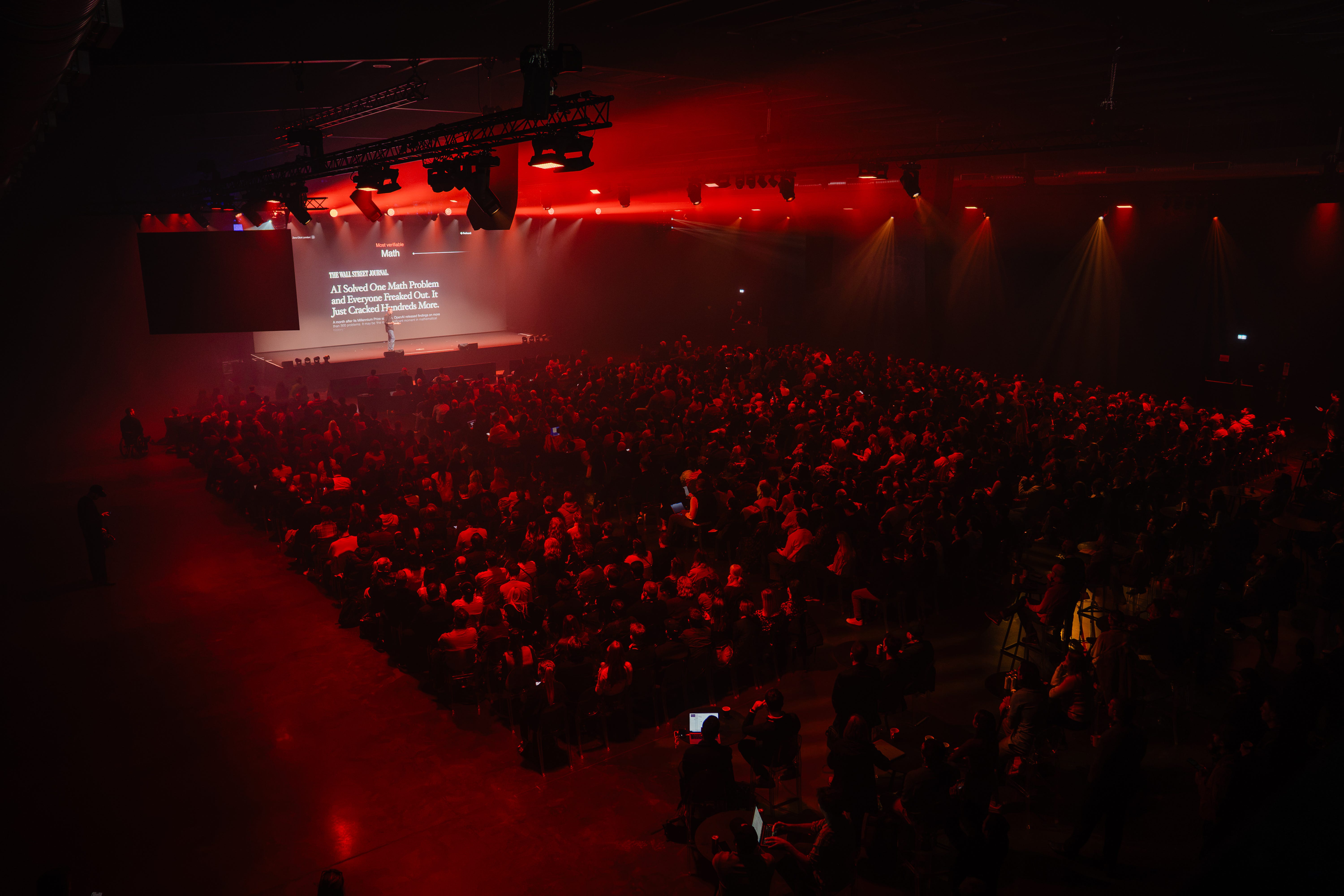
Around 1,000 people attended, a further 1,000 languished on the waiting list, and the lanyards read like the FTSE at a garden party. Over coffee I met people from consumer goods, financial services and the motor trade. On stage were senior marketing and digital leaders from Estée Lauder, De Beers, Nestlé, Bank of Ireland, Barclays, LinkedIn, Accenture Song, On and the AA, with Anthropic’s Ian Massingham for good measure.
It was, of course, a sales event, and Profound’s investors were in the audience in case anybody forgot it. The stagecraft occasionally tipped into pitch. I don’t hold that against anyone, because every talk I sat through also gave away something useful and held the room.
The cliché about AI and jobs is, for once, true
Every AI conference has its liturgy, and the most frequently recited verse is that the technology will transform jobs far more than it destroys them. Like most liturgy, it’s usually mumbled without much conviction. In search, it happens to be true.
Search engine optimisation (SEO) is a specialist’s craft. You kept a weather eye on how Google and Bing ranked pages, and the work sat close to development, done by a website team or an SEO unit somewhere down the corridor. GEO is a different animal. AI tools assemble their answers from news coverage, reviews, forums, product data and a company’s own pages all at once, which drags the discipline out of the back office and into the middle of the communications and marketing practice.
The consensus in the room was that an SEO specialist can make the leap to GEO, but only by learning a great deal about how audiences search and prompt AI tools, and about how paid, earned, shared and owned media work together.
You have to know the industry you’re working in, its publications, analysts, forums and prejudices, well enough to judge which sources an AI will trust. A generalist with a dashboard won’t get very far.
Website traffic is falling, and nobody can stop it
There is a saying, “You know the gold-rush is over when you can no longer sell the shovels”, which has been said about coding courses that closed down in the wake of Claude Code. In GEO, there are a lot of SaaS shovels to be bought and newfound expertise to snatch. Of course, there is a deeper unglamorous cause too: organic website traffic is in decline.
Chartbeat data published by the Reuters Institute shows organic search traffic to more than 2,500 websites worldwide fell by a third between November 2024 and November 2025. AI is driving a radical shift in how people look for things. We increasingly ask an AI assistant where we once scanned ten blue links, and in the US those assistants have started doing the shopping as well. The names on everyone’s lips were Meta’s Muse and Instinct, personal assistants that live in your phone’s apps and messages and will research and buy on your behalf.
Meta launched Muse in the US and Canada on 8 September, and Instinct is reportedly approaching $1 billion a year in transactions. Hence the name of the event. If an assistant can find, compare and buy for you, why would anyone click through to a website ever again? The web becomes a library for machines, and people receive their answers secondhand.
The data presented on the day sharpened the point. Profound’s published analysis of 7.5 million US ChatGPT conversations found the share about buying something rose from 13.9% to 19.2% between June 2025 and June 2026. It also presented new research on shopping journeys that hasn’t been published yet: in 60% of cases, the first shopping question named no brand at all, and only 19% of people had a specific product in mind. Fewer than 2% of those journeys showed up in website analytics as AI traffic, and only 17% went on to visit a brand the AI had mentioned.
Bank of Ireland showed what this looks like from the inside. In the first half of 2026, its organic traffic fell 35% while its conversion rate rose 40%. Fewer people visit, and those who do have already made up their minds somewhere the bank cannot see. The shortlist is now drawn up in conversations no analytics dashboard records, which ought to unsettle any communications director who still measures success in page views.
Profound cited forecasts that one in five online purchases will be made by AI agents by 2030, a mere four years away. At the present rate of change, I suspect shopping through an assistant will feel as unremarkable by then as paying with your phone does now.
A bot-first internet changes how communication works
The question that received the least airtime is the one that matters most to those of us who advise on reputation: what becomes of communication itself when much of the internet’s audience is software? The industry needs a grown-up, senior conversation about this, and so far it has mostly managed a technical one. The jobs we do are changing at a fundamental level, with AI becoming infrastructure across the industries we advise as well as our own.
Communications has been rebuilt before. Mobile phones, email and then social media each remade the work, and social media turned what had been a broadcast into a conversation. I entered the industry just as that was happening, when publishing something stopped being the end of the job because the public could answer back.
A bot-first internet poses an awkward question: how many of those conversations will still be between people? More and more of them will be with agents acting on someone’s behalf. I suspect the web will become a lonelier place for human connection, with communities of people persisting in some corners and communities of bots convening in others, presumably to discuss us.
For advisers, the conversation comes down to longevity: whether the businesses we’re building will still be relevant over the next 15 years, and whether we have the skills to get them there.
If I were a head of communications reading this, I’d open any Gen AI tool and interrogate it about my own company. What does it think of us? How does it rank us against our competitors? Which controversies does it remember? What does it say people think of our products? The answers will tell you how your newest and least accountable stakeholder is describing you to your audiences.
Thanks to Profound for hosting (and for the bus), and to the speakers for sharing their work so openly.
Michael,
Your closing advice is the part I would pin above the desk of every agency owner thinking of selling!
Somebody on the buyer's side has very likely asked the machine about them already, a week or two before the first meeting. The paragraph goes into the briefing pack and is half believed, which is about the right amount for a briefing pack.
Where I would push back gently a little is on "least accountable". Unaccountable, certainly. But it reads.
What it reads can be changed. In my experience most of what it gets wrong is not invented. It is out of date. And the person who left it lying about is usually the person it describes: the old team page, the client list from 2021, the press release about an office that has since closed and a photograph of the founder with noticeably more hair.
You cannot correct the machine. You can correct what it reads. It is an unglamorous job and, I suspect, the first GEO budget most agencies will ever need.
best regards