

We benefit from the technologies built on the shoulders of giants. The open web, very much like any utility, is taken for granted until taken away. It began in 1993, when CERN put the software behind the World Wide Web into the public domain, so anyone could use and build on it without paying a fee.
That decision set the terms for the next 30 years of the internet. Tim Berners-Lee and those who followed him, from the computer scientist Professor Dame Wendy Hall, who helped found the discipline of web science, to Jimmy Wales and Wikipedia’s volunteer editors, built the web on the idea that knowledge should be free to share.
Open-access scientists and publicly funded researchers joined them. When public social media entered mainstream use, this open web community became clear to see. It led to the open source software movement, where programmers who tirelessly built solutions to solve issues, gave software away for refinement. Indeed, I spent months during 2008/9 contributing to the Ubuntu Linux operating system.
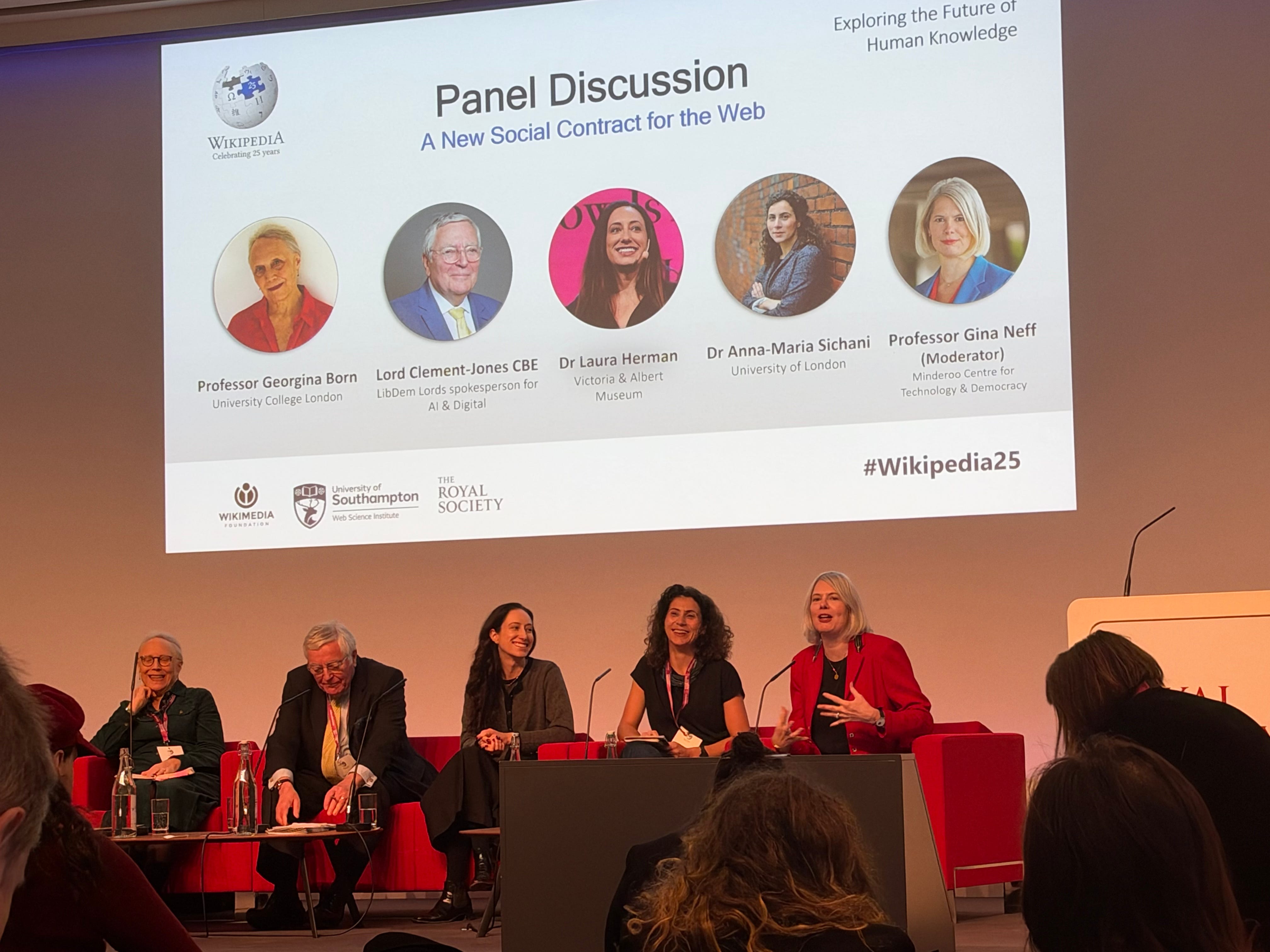
These are the pioneers of the open internet, and they’re still going strong. Many gathered at the Royal Society in London last week for an event on the future of human knowledge, organised with the Wikimedia Foundation and the University of Southampton’s Web Science Institute.
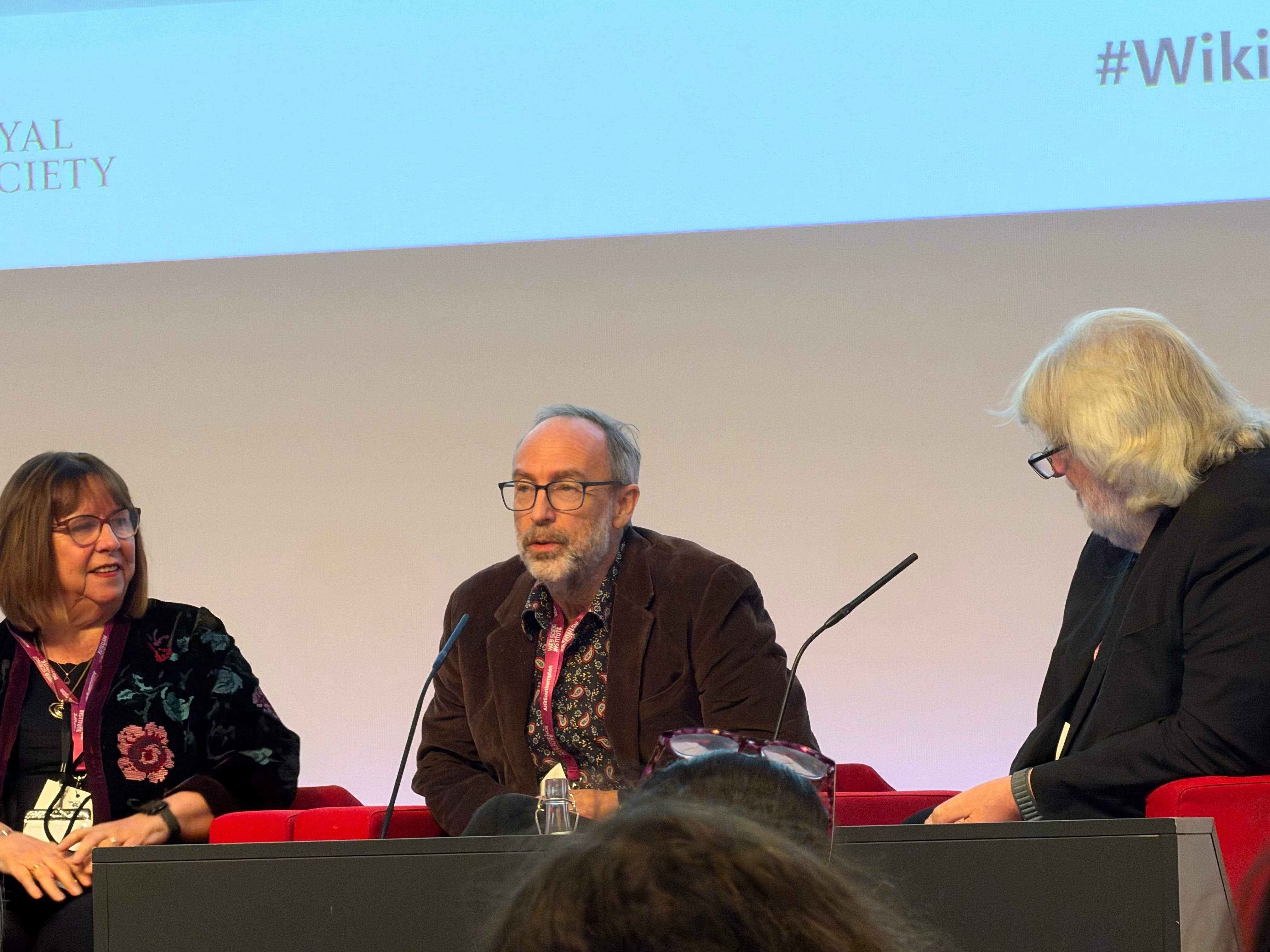
Nostalgia was in the air; a couple had been at Hypertext ‘91 in San Antonio, when Berners-Lee gave the first US demonstration of the web. Recollections of a tequila fountain outside of the conference space proved the bigger distraction for some attendees. Amid the distractions, some scepticism too, “why would anyone want to visit the internet when nothing is on it?”. 30+ years of building the internet later, it’s fair to say the mood has changed.
The open web ran on a deal of free knowledge for credit
These rules were never written down, but we all understood it. You share knowledge freely, and you’re attributed for it. For instance, I write an article on this humble Substack, and if you share it my name is mentioned (hopefully favourably!).
For two decades, search engines broadly kept to that deal, because a search result sent people to the source. Google and its predecessors would have you for a moment whilst the search query is written, and then you would pop off on your online journey.
But AI is breaking this model, and the foundations of the internet are radically changing as a result.
A chatbot or AI summary takes the knowledge and writes the answer itself, often without saying where it came from. On the first panel at the Royal Society, moderated by Jonathan Cates of Wellcome Collection, all four speakers made the same point from different angles: AI takes a great deal from open knowledge and returns very little.
AI is turning open knowledge into a corporate product
The imbalance is economic, and it starts with the cost of serving AI crawlers. Tajh Taylor of the Wikimedia Foundation explained that people and AI crawlers navigate web pages entirely differently. A person reads a page and follows a couple of links, while an AI crawler follows every link and reference, so each automated visit costs more to serve. Insane volumes of traffic don’t just put strain on the Wikimedia Foundation’s servers, but also the accredited reference sources across Wikipedia pages.
In 2025, the Foundation said at least 65% of the traffic for the most expensive content served by Wikimedia Foundation data centers is generated by bots, even though these software agents represent only about 35% of page views. The truth is serving knowledge to bots is a cost that falls on a charity funded largely by donations, while the value flows to some of the world’s largest tech companies.
A man in the middle of this debate is Matt Rogerson of the Financial Times, who claimed at least 21 well-funded data brokers resell publisher content to businesses, and none of that money reaches the people who wrote it. He also cited Stanford research in which only one of four leading AI models cited the FT and linked back to it, while another drew about 60% of its material from content farms and pirate sites.
Dr Jess Wade of Imperial College London added that in emerging fields such as quantum materials, many new companies are training models on poor data. Repackaging open knowledge for commercial gain, mostly without attribution, leaves its creators unpaid and its people relying on AI answers unable to check them.
Google’s own results point to a tipping point
For a long time, Google’s executives said the web was thriving. That narrative began changing in September 2025, when its lawyers told a US court that “the open web is already in rapid decline”, although Google later said the filing referred specifically to open-web display advertising, not the entire open web.
But last month, Google’s chief business officer Philipp Schindler cited lower monetisation in AI Mode during its third-quarter results, and Alphabet shares fell over 11%. We all knew it, but it’s now confirmed. When the company whose business was built on sending people to websites starts to feel the cost of keeping them on its own pages, the old model has reached its limit.
The internet is splitting into a human tier and an agent tier
Wikimedia, like thousands of organisations, works with Cloudflare, which handles a large share of the world’s web traffic. It’s a barometer for internet activity, saying daily requests from AI agents on its network grew by more than 1,700% over the past year, and that in 2026, for the first time, more than half of internet traffic wasn’t human.
My lazy prediction, because it’s already started, is a two-tier internet.
One tier is for humans: websites and paywalled content that people visit less often but value more. The other is for agents, the AI software that reads and increasingly buys on people’s behalf, often on metered and paid terms.
Based on how fast these figures have moved in two years, I expect the
effect on companies to be much clearer by late 2027.
From the Royal Society floor, I asked whether open access to knowledge still assumes people find it on the open web, when more people now find information through AI assistants. The FT’s view was that this is for publishers to decide. I’m less sure, because newspapers said much the same when readers first moved online.
Whether the agent tier ends up funding the open web or draining it, we’ll have to see. Much will likely rely on regulation catching up with the speed of AI development… which will never happen. What we can do together, as communications practitioners, is ensure the companies we serve are ready for this new internet.
One web for people and one for machines is the old two-door saloon again, except this time the robots get the door with the bar. Lovely reminder that CERN gave the whole thing away for free in 1993.